
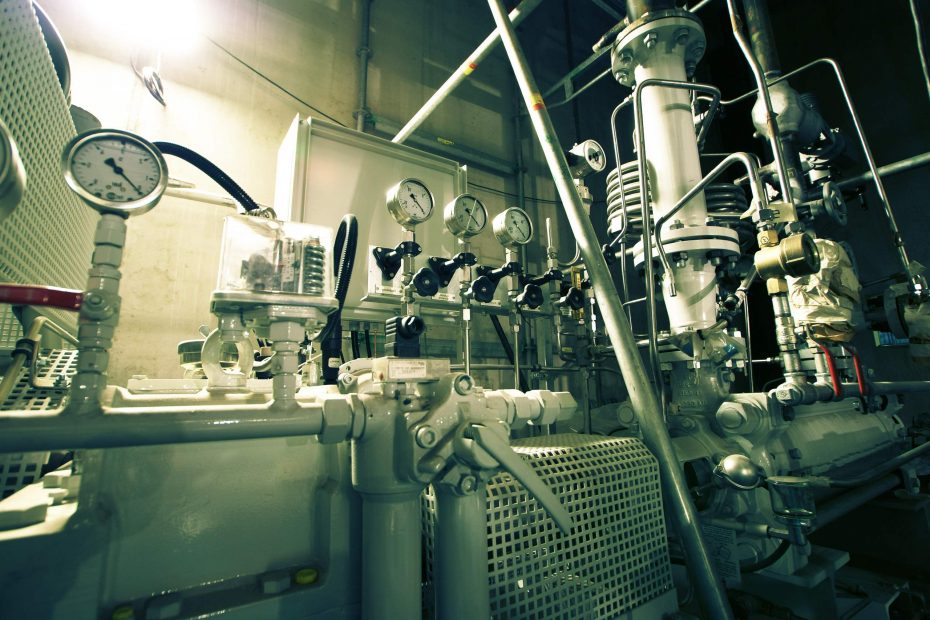
Sensors are found in many of today’s instruments. They allow a device to sense changes in temperature, pressure, movement, light, force or any other condition, and turn those changes into useful information. From industrial tools to scientific equipment, sensors act as the link between the physical world and an instrument’s measurement system.
What is a Sensor?
A sensor is a device that senses a physical quantity and converts it into a signal. That signal can then be processed, displayed, recorded or used to control some other component of the system.
The quality of the sensor directly affects the quality of the measurement. Some important factors to take into consideration when choosing a sensor are sensitivity, accuracy, response time, measurement range and environmental stability.
Common Sensor Types
There are many types of sensors designed for different uses. Some of the most common include temperature sensors, pressure sensors, position sensors, motion sensors and light sensors.
Temperature Sensors
Temperature sensors are used in many industrial machines, scientific equipment, medical devices and automated systems to measure the level of heat or cold. The type of temperature sensor needed depends on the temperature range, response time, accuracy and environmental conditions required.
Pressure Sensors
Pressure sensors are used to detect changes in the pressure of a gas or liquid. They are used in industrial equipment, process instruments, monitoring equipment and control systems. The correct pressure sensor to choose depends on the pressure range and the type of substance being measured.
Position and Motion Sensors
Position and motion sensors are used to detect movement, distance, rotation or any change in location. They are widely used in automated systems, robotics, manufacturing equipment and scientific instruments.
Accuracy and Sensitivity
It is not enough for a sensor to just detect a change in the physical quantity; it needs to do so accurately.
Accuracy refers to how close the measurement is to the actual value. Sensitivity refers to how much the sensor’s output changes in response to a change in the physical quantity. These properties are both important when selecting a sensor for a particular instrument. High sensitivity does not always mean high accuracy.
Signal Processing
The signal generated by a sensor usually needs to be processed before it can be used. Depending on the type of instrument, it may need to be amplified, filtered, converted or digitally processed. This is done to remove any unnecessary noise and to turn the raw sensor signal into something that can be displayed or used for further analysis.
Modern instruments often combine sensors with electronic circuits to automate measurements.
Calibration and Reliability
Even a high-quality sensor will produce inaccurate measurements if it is not properly calibrated. Calibration involves comparing the output of the sensor with a known standard. This determines whether the sensor or instrument is performing within its specified accuracy limits. Calibration is especially important in industrial, scientific and technical applications, where accurate measurements are critical for making decisions or producing a product.
Selecting the Right Sensor
When choosing a sensor, it is not enough to know what quantity needs to be measured. Other considerations include the operating temperature, environment, measurement range, response time, accuracy, mounting requirements and expected lifespan.
A sensor that works perfectly in a laboratory environment may not be suitable for use in a high-temperature industrial setting. Therefore, the right sensor to select is the one that best fits all the operating conditions of the instrument.
Sensors Are Only One Part of an Instrumentation System
A sensor is just one element of a measurement system. Its signal must be compatible with signal conditioning, electronic circuits, software, displays and other components of the system. For this reason, an instrument designer must think of the entire measurement system, rather than considering the sensor in isolation. An instrument should be designed so that the measurement remains accurate and useful throughout the entire process, from the first physical contact to the final display.
Summary
Sensors are the basis of many modern measurement and control systems. Their ability to convert physical quantities into an easily measurable signal makes them an essential component of precision instruments in many fields. Learning how sensors work, how they affect measurements and how they interact with other components is an important step in designing reliable and accurate measurement systems.